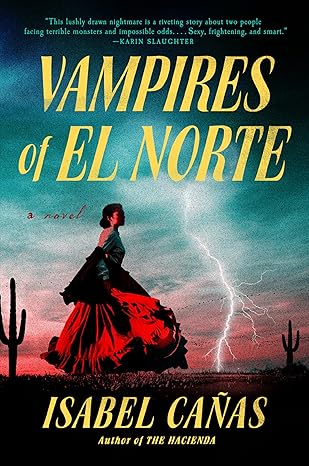
I made an exception to my practice of reading other people’s book reviews only after I have written my own, and noticed that some readers are angry that, to them, this is more of a historical romance than it is a horror novel. It’s true that there is a romance, but there is also horror here, though in more of a historical/political sense than some might have expected. The Vampires of El Norte are not the sparkly ones of the Twilight stories, or even the more traditional ones that turn wear long capes and turn into bats; they are only the stuff of nightmares.
The book is set in Mexico in the 1840s, on land that would eventually become part of the United States, specifically near the Texas border. This setting is of particular interest to me, as I was born in the US Southwest and we have traced the roots of my ancestors back to a time when our part of the country was part of Mexico – the border crossed us, as it would eventually do to the characters in this story. I grew up in Southern California, where there is residual conflict related to colonialism and historical “ownership” of the land, important (yet often ignored) factors in discussions of public policy with regard to immigration.
The main storyline centers around a young couple, she the daughter of the landowner, he a peon, a servant who grew up with the ranchero’s daughter, dreaming of someday becoming a landowner himself and making her his bride, though the chances of this are slim to none. During this time in Mexican history, the landowner’s daughter is his “property”, valuable in that she can be married off to whomever he sees as a financially advantageous match; the young man is also, to some degree, his “property”, born on the land and thus, required to work the land and pay tribute to the landowner, subject to corporal punishment or worse if breaks a rule or forgets his place in the social hierarchy.
It is within this historical context that Isabel Cañas sets this story of forbidden love. She draws from cultural mythology and tradition – the monsters are the same ones the children are threatened with when they misbehave and the curanderas/healers have seemingly supernatural skills of healing and protection. Were the children actually told these stories to help them prepare to defend themselves against a real threat? Do the curanderas have magic, or only exceptional knowledge of plants and their uses? On top of all of this, the melodramatic depiction of the romance reminds me of a telenovela, volatile, predictable, and utilizing multiple familiar tropes. I will admit that I kept getting annoyed by the couple – missing information and misunderstandings cause both of them to make bad decisions, and simple communication would have neutralized much of the romantic drama of the story. That said, I kept thinking that the entire book was almost satirical given the underlying political and social conflict, and this made it easier to remain invested in the narrative.
I feel a bit of ambivalence though. The author juggles social and political commentary, romance, culture, and mythology, but I’m not sure she always gets the balance right. I like that she depicts class conflict and racial and sexual inequality within the Mexican culture, separate from the threat of the would-be colonizers. On the other hand, the Anglos are very clearly the “bad guys” – there is no nuance here. Also, there’s so much focus on the the melodrama and tropes that there isn’t really room for character development, so I had to rely on the predictable nature of these types of stories instead of feeling any sort of connection with the characters.
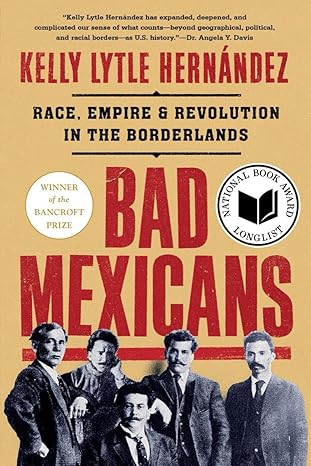
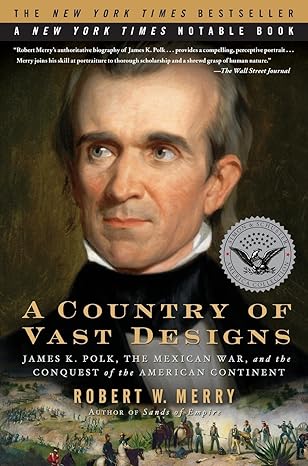
To those concerned about whether or not this is a horror novel, by the end of the novel, I think the vampire storyline remains half baked. In one scene I got the impression that she isn’t exactly clear on who her monsters are, and then as the story continues, their identity becomes even more convoluted and contradictory (the Anglos are the vampires! no, wait, that’s not true at all!). At the same time, it is chilling living in the future and knowing that all of the main characters (or their children) are, to some degree, doomed, regardless of how the book ends. Reading the book has inspired me to brush up on my Mexican history, something I hope to do soon.*
*On my TBR: